Many friends have given feedback that due to a lack of understanding of the latest global emission control areas and the latest emission policies, it is easy for ships to be fined or detained by local PSCOs. This issue tries to collect and summarize the latest information on the scope of emission control areas and emission requirements around the world and present it to everyone.
One
1
What is the purpose of a ship emission control area?
The main purpose of establishing a ship emission control area is to improve the air quality in coastal and riverine areas, especially in port cities, by controlling the emissions of sulfur oxides, nitrogen oxides, and particulate matter from ships navigating, berthing, and operating within the emission control area, and to promote energy conservation, emission reduction, and the development of green shipping.
Two
Why control the emission of air pollutants from ships?
Relevant studies show that atmospheric pollutants emitted by ships mainly originate from exhaust gases produced by ship power systems, cargo volatilization during transport, and onboard burning. The atmospheric pollutants generated are primarily sulfur dioxide (SO2) and nitrogen oxides (NOx), and also contain certain amounts of inhalable particulate matter (PM10), fine particulate matter (PM2.5), carbon monoxide (CO), volatile organic compounds (VOCs), and other atmospheric pollutants, as well as greenhouse gases mainly composed of carbon dioxide (CO2). At present, domestic and international research on controlling ship air pollution mainly focuses on SO2, NOx, and PM. Among them, SO2 is derived from the sulfur in ship fuel, so SO2 emissions are directly related to fuel type, fuel quality, and consumption. NOx is mainly produced by the oxidation of nitrogen in the air during rapid combustion and high-pressure conditions, and its emissions are closely related to the engine and its operating conditions. Particulate pollutants such as PM10 and PM2.5 include primary particles such as directly emitted black carbon and heavy metals, as well as secondary particles formed through chemical reactions, such as sulfates, nitrates, and secondary organic matter, which can be formed from SOx and NOx. Controlling the sulfur content in ship fuel is an effective means to reduce sulfur oxides and particulate emissions from ship engines and is currently the main method for controlling ship air pollution both domestically and internationally.
Three
What are the ship emission control areas?
After extensive research, the editor found that there are currently six internationally recognized emission control areas. In addition, countries such as China, South Korea, Norway, Iceland, and Turkey have also established corresponding emission control areas and emission standards. The six main ones among these include:
Established with the approval of the International Maritime Organization
The Baltic Sea region
Beihai sea area
North American waters
Caribbean Emission Control Area
Approved by the European Union
European Sea Emission Control Area
Approved for establishment in the United States
California Emission Control Area, USA
All six of the above regions require the use of fuel with a sulfur content of less than 0.1%.
For the specific scope of each control area and the emission requirements, please see the detailed explanation below.
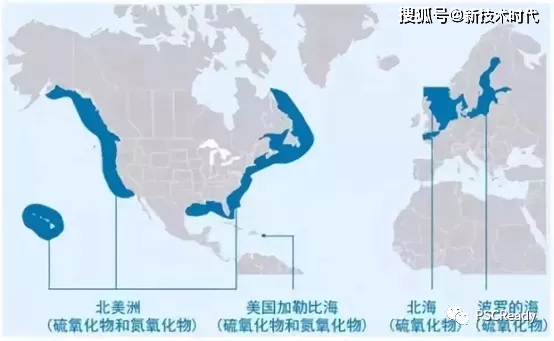
1
Baltic Sea Emission Control Area
The Baltic Sea area is a Sulphur Oxides Emission Control Area approved by the IMO and officially came into effect in July 2010. This area refers to the Baltic Sea itself, as well as the Bay of Bothnia, the Gulf of Finland, and the entrance to the Baltic Sea, bounded at the Skagen Point in the Skagerrak Strait at latitude 57°44.8′N. The specific location and scope of the control area are shown in the diagram below.
According to Annex VI of the International Convention for the Prevention of Pollution from Ships (MARPOL 73/78), from July 1, 2010, ships operating in this area shall use fuel oil with a sulfur content not exceeding 1.00% m/m, and from January 1, 2015, they shall use fuel oil with a sulfur content not exceeding 0.10% m/m. In addition, if a ship uses an exhaust gas cleaning system that achieves an equivalent effect to low-sulfur fuel, the requirement to use low-sulfur fuel may be waived.
2
North Sea Emission Control Area (including the English Channel)
The North Sea area is a Sulphur Oxides Emission Control Area approved by the IMO and officially activated in July 2010. The area refers to the North Sea itself, including the waters within the following boundaries:
(a) The North Sea area south of 62°N latitude and east of 4°W longitude;
(b) Skagerrak Strait, south to the northeast latitude 57°44.8´ of Skagen Point;
(c) The English Channel and the entrance east of 5°W and north of 48°30´N.
According to Annex VI of the MARPOL Convention, from July 1, 2010, ships operating in this area shall use fuel oil with a sulfur content not exceeding 1.00% m/m, and from January 1, 2015, shall use fuel oil with a sulfur content not exceeding 0.10% m/m. In addition, if a ship uses an exhaust gas cleaning system with an effect equivalent to low-sulfur fuel oil, it may be exempted from the requirement to use low-sulfur fuel oil.
3
North American Emission Control Area
The North American Emission Control Area is an emission control area for sulfur oxides and nitrogen oxides approved by the IMO, officially activated on August 1, 2012. This area is located near the coasts of the United States and Canada, and includes the following sea areas:
(a) Sea areas outside the Pacific coast of the United States and Canada;
(b) The sea areas off the Atlantic coasts of the United States, Canada, and France (Saint Pierre and Miquelon), as well as the Gulf of Mexico of the United States;
(c) The sea areas off the coasts of the Hawaiian Islands such as the Big Island, Maui, Oahu, Molokai, Niihau, Kauai, Lanai, and Kahoolawe.
According to Annex VI of the MARPOL Convention, from August 1, 2012, ships operating in this area shall use fuel oil with a sulfur content not exceeding 1.00% m/m, and from January 1, 2015, they shall use fuel oil with a sulfur content not exceeding 0.10% m/m. In addition, if a ship uses an exhaust gas cleaning system with an effect equivalent to that of low-sulfur fuel, it is exempt from the requirement to use low-sulfur fuel. Regarding nitrogen oxide emissions, the MARPOL Convention stipulates that from January 1, 2016, ships operating in this area shall use marine diesel engines that meet the "Tier III" standards specified in Regulation 13 of Annex VI of the MARPOL Convention.
4
U.S. Caribbean Emission Control Area
The United States Caribbean Sea Emission Control Area is a sulfur oxide and nitrogen oxide emission control area approved by the IMO, which officially took effect on January 1, 2013. This area is located near the Atlantic and Caribbean coasts of the Commonwealth of Puerto Rico and the United States Virgin Islands.
According to Annex VI of the MARPOL Convention, from January 1, 2014, ships operating in this area shall use fuel oil with a sulfur content not exceeding 1.00% m/m, and from January 1, 2015, they shall use fuel oil with a sulfur content not exceeding 0.10% m/m. In addition, if a ship uses an exhaust gas cleaning system with an effect equivalent to that of low-sulfur fuel, it is exempt from the requirement to use low-sulfur fuel. Regarding nitrogen oxide emissions, the MARPOL Convention stipulates that from January 1, 2016, ships operating in this area shall use marine diesel engines that meet the "Tier III" standards specified in Regulation 13 of Annex VI of the MARPOL Convention.
5
European Sea Emission Control Area
The European sea emission control area was established by the European Union through legislation and officially came into effect in January 2010. The area covers all EU ports, but does not include the Azores, Madeira, or Canary Islands.
According to EU regulations (EU Low Sulphur Directive 2005/33/EC, 82/714/EEC, etc.), from January 1, 2010, Member States shall ensure that ships at EU ports that are moored or at anchor for more than 2 hours use fuel with a sulfur content not exceeding 0.10% m/m (this does not apply to ships using shore power while berthing). In addition, if a ship, by using LNG or other fuels or implementing other emission reduction measures, achieves sulfur oxide emissions equivalent to those from using low-sulfur fuel, EU Member States may allow that ship to be exempt from the requirement to use low-sulfur fuel. Regarding nitrogen oxides, ships in the waters under the jurisdiction of EU countries (including coastal and inland waters) shall comply with the EU Stage 4 and Stage 5 nitrogen oxide emission limits from January 2014 and January 2019, respectively.
6
California Emission Control Area, USA
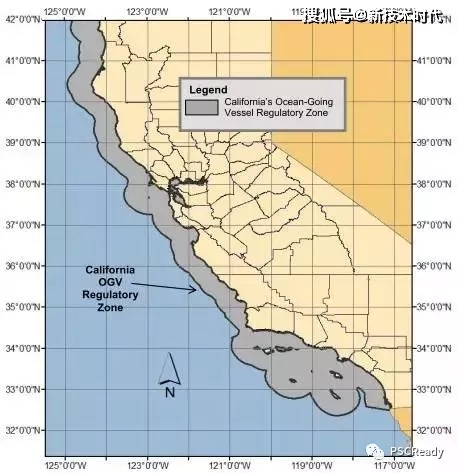
The California emission control area of the United States was established by the California Air Resources Board and officially launched in August 2012. The area covers the 24 nautical mile coastal waters of California, ports, and some islands (see Figure 2).
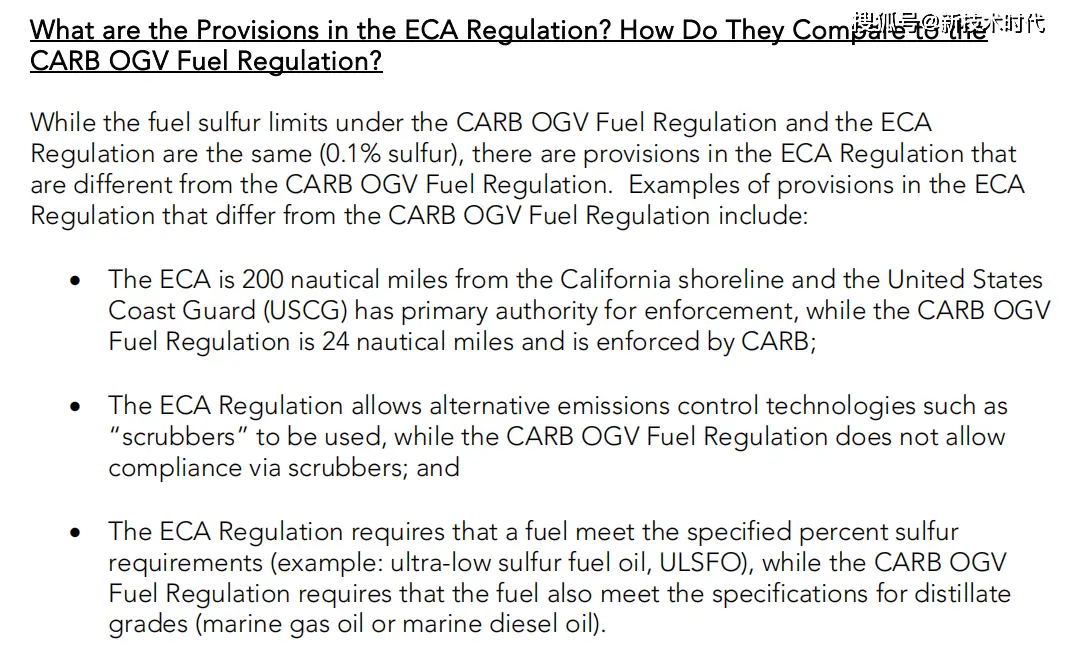
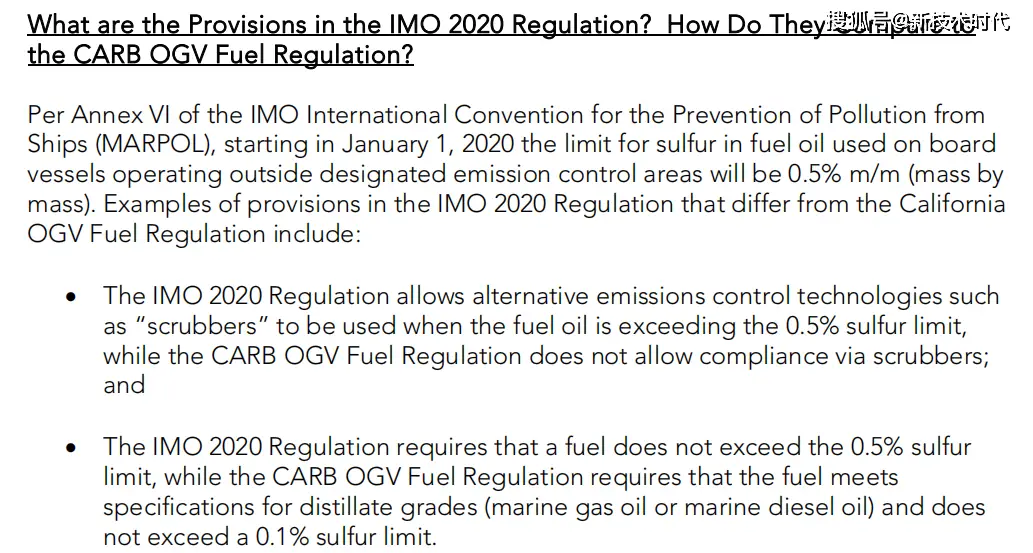
According to the regulations of the California Air Resources Board (California Code of Regulation Titles 13 and 17), from August 1, 2012, vessels operating within this area must use marine distillate diesel with a sulfur content of no more than 1.00% m/m or marine diesel with a sulfur content of no more than 0.50% m/m; from January 1, 2014, they must use marine distillate diesel or marine diesel with a sulfur content of no more than 0.10% m/m. The use of exhaust gas cleaning systems as an equivalent method to low sulfur fuel is not accepted in this area. Regarding nitrogen oxides, from January 1, 2009, vessels in U.S. waters must comply with the NOx emission limit requirements set out in Tier 3 of Regulation 13 of Annex VI of the MARPOL Convention; from January 1, 2014, commercial diesel engines must comply with the Tier 4 NOx emission limit requirements.
Some friends said that they couldn't tell the exact location from the picture, so we checked the coordinates set by the IMO. The second mate can mark it on the nautical chart.
For detailed coordinates, please copy the following link and open it from the browser address bar to view: http://www.imo.org/en/OurWork/Environment/PollutionPrevention/AirPollution/Pages/Emission-Control-Areas-(ECAs)-designated-under-regulation-13-of-MARPOL-Annex-VI-(NOx-emission-control).aspx
Next, let's take a look at this oddball:California Emission Control Area, USA
The California Emission Control Area was established by the California Air Resources Board of the United States and officially launched in August 2012. The area covers the waters 24 nautical miles off the coast of California, ports, and some islands.
Map of emission control areas in California, USA
In addition to the above six, the following areas also need to use fuel with a sulfur content of less than 0.1%:
4. China's Latest Emission Control Areas
On December 20, 2018, the Ministry of Transport of China issued the "Implementation Plan for the Control Area of Atmospheric Pollutant Emissions from Ships" and clarified the scope of the control areas and the control requirements as follows:
1. Emission Control Area:
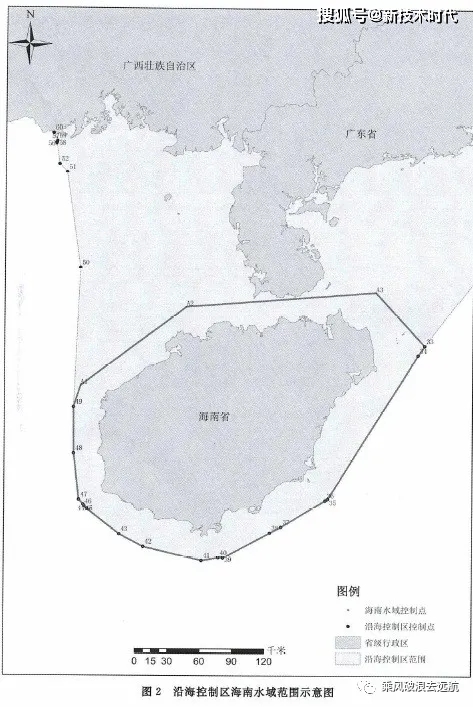
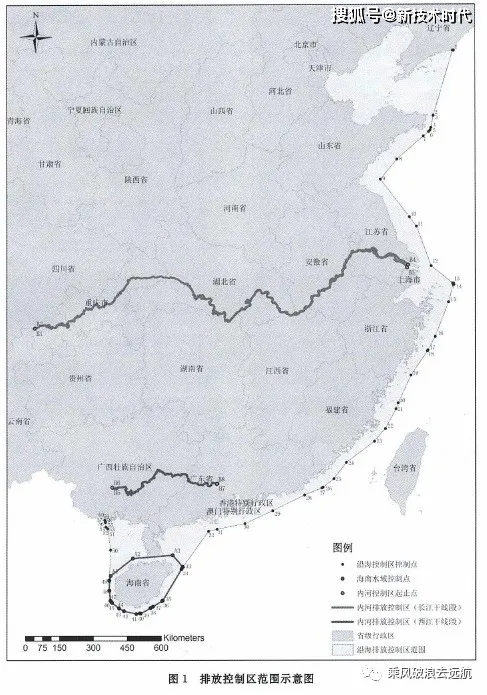
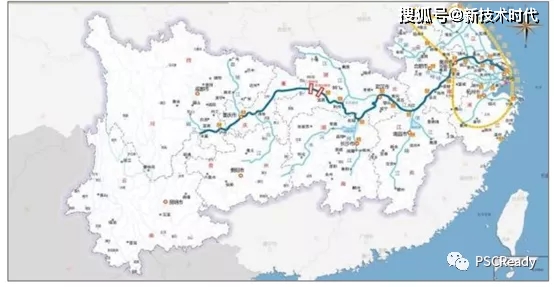
China's scope of control areas for ship atmospheric pollutants has further expanded the geographical range of control based on the already established ship emission control areas in the Bohai Sea (Beijing-Tianjin-Hebei), Yangtze River Delta, and Pearl River Delta waters, including coastal control areas and inland river control areas of China.
China's coastal control areas and inland river control areas are shown in the left image, and the right image shows the scope of Hainan control area:
China Inland Waterway Control Zone
2. Requirements for the control of sulfur oxide emissions from ships:
1. Starting from January 1, 2019, ships entering coastal control zones shall use marine fuel with a sulfur content not exceeding 0.5% m/m.
2. Starting from January 1, 2020, seagoing vessels entering inland emission control areas shall use marine fuel oil with a sulfur content not exceeding 0.1% m/m.
3. From January 1, 2022, ships entering the controlled waters of Hainan must use ultra-low sulfur oil with 0.1% m/m.
4. From January 1, 2025, ships entering coastal control zones shall use marine fuel with a sulfur content not exceeding 0.1% m/m. (This provision has not yet been implemented and is currently under evaluation)
3. In addition, regulations have also been made for the emission of nitrogen oxides:
a.January 1, 2000and subsequent constructions (based on the time of keel laying) or major modificationsInternational navigation ships, for single engines with a power greater than 130 kilowatts, it should comply with the 'International Convention for the Prevention of Pollution from Ships'tier-IRegarding the emission standards for nitrogen oxides.
b.January 1, 2011and subsequent constructions (based on the time of keel laying) or major modificationsInternational navigation ships, for single engines with a power greater than 130 kilowatts, it should comply with the 'International Convention for the Prevention of Pollution from Ships'tier-IIRegarding the emission standards for nitrogen oxides.
c.March 1, 2015and subsequent constructions (based on the time of keel laying) or major modificationsDomestic vessels of Chinese nationality, for single-engine power greater than 130 kilowatts, it should comply with the 'International Convention for the Prevention of Pollution from Ships'tier-IIRegarding the emission standards for nitrogen oxides.
d,January 1, 2022Chinese-flagged domestic vessels that are built thereafter (based on the date of keel laying) or undergo major modifications, and that enter coastal control areas and inland control areas, with single-cylinder displacement greater than or equal to 30 liters, should comply with the 'International Convention for the Prevention of Pollution from Ships'tier-IIIRegarding the emission standards for nitrogen oxides.
4. In addition, there are requirements for the use of shore power
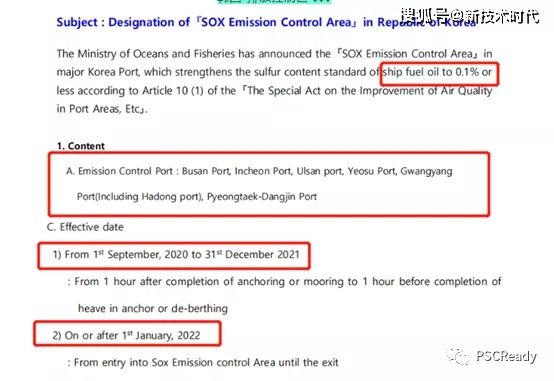
5. South Korea's Latest Emission Control Zone
Including eight ports in South Korea: Busan, Incheon, Ulsan, Yeosu, Gwangyang, Hadong, Pyeongtaek, and Dangjin; before the end of 2020 was a transition period, with oil change one hour before and after berthing. After 2021, entering the control area requires the use of 0.1% low-sulfur oil.
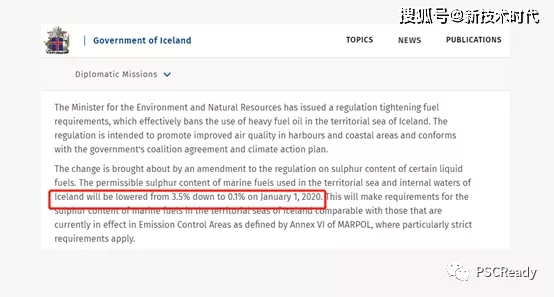
6. Ports and waters of Iceland;
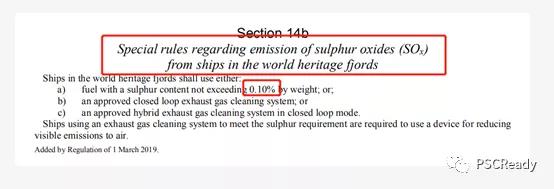
7. Norway - World Heritage 'Fjord' Area;
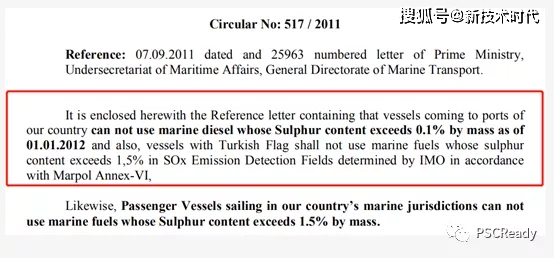
8. Turkey - Port
Finally, let's talk about the exhaust gas cleaning system (EGCS)
Exhaust Gas Cleaning Systems (EGCS), as SOx equivalent compliance devices, are used to meet the requirements of the 'Global Sulfur Cap.' The IMO resolution MEPC.259(68) provides detailed regulations on the use of EGCS on ships worldwide. However, in addition to following this regulation, various regions around the world have also introduced specific regional requirements (including scrubber water discharge). We have now compiled the requirements for key countries/regions.
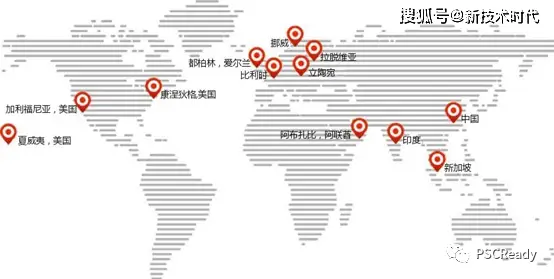
Asia region
China
It is prohibited to discharge wash water from open-loop exhaust gas cleaning systems in port waters within inland control areas, coastal control areas, and the Bohai Sea.
Hong Kong, China
1. Ships using EGCS need to submit a written application for initial or subsequent certificate exemption 14 days before arrival at the port. The Hong Kong Environmental Protection Department will issue an exemption of no more than 3 years after being satisfied with the review of the relevant documents.
2. If a vessel uses non-compliant fuel, an exemption for one stay period in Hong Kong may be granted with the consent of the Hong Kong Environmental Protection Department.
Taiwan, China
If the provisions of MEPC.259(68) are met, the exhaust gas cleaning system (EGCS) may be accepted as an equivalent alternative method.
Australia
Restricted discharge of wash water
The discharge of wash water must meet the following requirements:
1. Approval equivalent to that of the flag state's competent authority or its authorized RO is required.
2. Notify AMSA before arriving at the first port in Australia and report as required.
3. Meet the monitoring requirements for the discharge of washing water.
4. Meet the requirements for discharging, handling, and recording EGCS wash water residues onshore.
5. The testing of wash water is carried out through sampling and analysis during the trial operation of the EGCS, and it must be conducted at least once every twelve months over a period of two years. If the data or evidence from this sample analysis is not provided to AMSA before arriving at the first port in Australia, the vessel is not allowed to directly discharge EGCS wash water into Australian waters.
6. If any EGCS system is found not to meet IMO guideline requirements (including but not limited to wash water discharge standards), its use in Australian waters may be prohibited.
Japan / South Korea
According to IMO guidelines, EGCS is accepted as an equivalent alternative method.
Singapore
1. Starting from January 1, 2020, the discharge of wash water is prohibited (this ban does not apply to vessels navigating in Traffic Separation Schemes (TSS) and not docking at Singapore ports).
2. For ships flying the Singapore flag, the emission reduction technologies installed on the ship must be approved by the MPA (submitted to MPA through RO).
Europe region
European Union
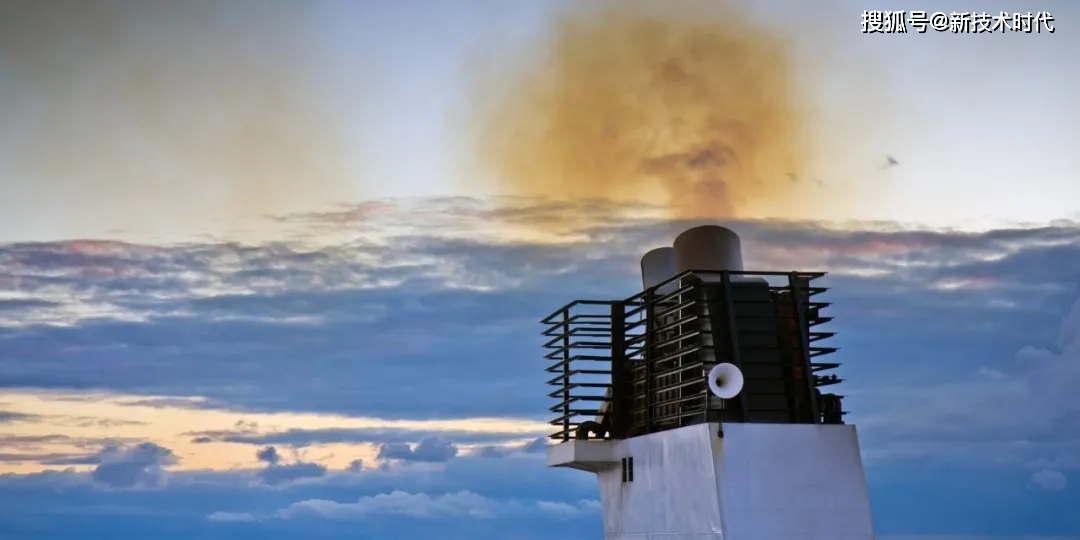
1. Unless a closed-loop EGCS is used, fuels with a sulfur content exceeding 3.5% shall not be used.
2. For ships flying the flag of an EU member state, the EGCS should be approved in accordance with the requirements of the Marine Equipment Directive (MED) 2014/90/EU.
3. For EGCS based on research and experimental purposes, the European Union has proposed requirements for related reports, duration, emissions, and evaluation.
4. For EGCS that use chemical agents, additives, formulations, or generate related chemical agents within the system, wash water shall not be discharged into the ocean—including enclosed docks, ports, and estuaries—unless the shipowner can demonstrate that its discharge has no significant negative impact and does not pose a threat to human health and the environment. If NaOH is used, the wash water may be discharged if it meets the IMO EGCS guideline discharge standards and its pH does not exceed 8.0.
5. For ships navigating EU waters, it is required to install EGCS for continuous monitoring of SOx emissions, which means that equipment approved under Scheme A is not suitable for use unless it has a redundant exhaust gas continuous monitoring (SO2/CO2) system.
The EU directive (Directive 2012/33/EU) allows the use of EGCS as an alternative measure to meet SOx emission control requirements, but it should operate in closed mode (Article 3a). Therefore, ships equipped with open-type EGCS should switch to compliant fuel and stop using the EGCS before entering waters regulated by the EU directive; ships equipped with hybrid EGCS should switch to closed mode operation before entering waters regulated by the EU directive. Relevant fuel changes or EGCS operating mode changes should be recorded as required.
Prohibit discharge of washing water
The following countries prohibit the discharge of wash water:
Germany, Belgium, Latvia, Estonia, Lithuania, Ireland
The Americas
United States
Differences from the IMO requirements:
1. The discharge of wash water shall not contain oil, including oily mixtures, the harmful quantity of which is determined according to 40 CFR Part 110.
2. Discharging wash water residues is prohibited; they must be sent to onshore reception facilities.
3. Special provisions for the use of EGCS:
3.1 The continuous monitoring equipment for wash water must be regularly calibrated in accordance with the requirements of the testing equipment manufacturer and the EGCS manufacturer.
3.2 The monitoring equipment for PAH (polycyclic aromatic hydrocarbons) emissions shall have a service life of at least 2 years.
3.3 Regulations on EGCS wash water discharge:
1) The pH value measured at the ship's overboard discharge outlet shall not be less than 6.0. No other pH measurement methods are accepted. As an exception during ship operation and conversion, the maximum allowable difference in pH values between the inlet and outlet is 2.0 pH units. This difference must be measured at the ship's inlet and overboard discharge locations.
2) Beyond three nautical miles from the shore, the USCG may adopt a case-by-case approach and accept IMO's provisions on wash water discharge values and measurement methods (i.e., direct measurement or measurement using calculation methods).
3) During the first year of permit coverage or system operation (whichever comes first), two samples of each component group required for analysis in 4) must be collected and analyzed to demonstrate the maintenance of treatment equipment, the accuracy of probes, and compliance with permit requirements. Samples must not be taken less than 14 days apart. Samples must be collected at the water intake (as background), water after it flows through the scrubber (but before any treatment system), and at the discharge point. After the first year, at least one sample must be collected each calendar year. Records of sampling and test results must be kept on board for 3 years.
4) The projects mentioned in 3) that need analysis are as follows: a. Dissolvable metals and total metals: As, Cd, Cr, Cu, Pb, Ni, Se, Ti, V, Zn (EPA Method 200.8 or 200.9 is recommended); b. PAHs (polycyclic aromatic hydrocarbons) (EPA Methods 550.1, 610, 625, 8100, 8270c, 8310 are recommended); c. Nitrates and nitrites (EPA Method 353.2 is recommended); d. pH value (using Standard Method (SM) 4500-H B).
California CARB regulations (13 CCR, section 2299.2) do not allow the use of EGCS as an alternative method for SOx emission control (temporary exemptions are only granted for experimental and research-stage emission reduction technologies/methods). For vessels equipped with EGCS, they should switch to compliant MGO or MDO in a timely manner before entering waters regulated by CARB (within 24 nautical miles from the coast) and stop using EGCS. The related switching operations should be recorded in accordance with regulations.
Canal Authority
Panama Canal Authority / Suez Canal Authority
Prohibit discharge of washing water
Source Editor: Ship Military Lecture Hall
Based on the successful hosting of a series of shipping and offshore engineering forums, summits, and exhibitions both domestically and abroad, Shanghai-based International Shipping & Offshore Network and Shanghai Shuaihao Cultural Communication Co., Ltd. are pleased to announce that the discussion on Ship EEXI and popular ship types will be held for exchange in Shanghai on December 2-3. Numerous domestic and international shipowners, shipyards, designers, financial institutions, equipment suppliers, and service sectors are expected to actively participate in the two-day event scheduled for December 2-3, 2020, in Shanghai.“2020 International Exhibition and Forum on Green and Intelligent Ships and Offshore Engineeringheld at the same timeThe 5th Shanghai Summit on Ship Ballast Water Systems (BWMS) and Scrubbers. Future applications and developments of new concepts such as ballast water systems, scrubbers, LNG supply systems (FGSS), and ship EEXI will be highlights for discussion.